Micro bangs
Micro bangs are a very short fringe that ends around the middle of the forehead or higher, well above the eyebrows. They're usually cut blunt and straight across, so the brows and eyes become the focus of the face. With almost no length to hide behind, they are a bold fringe and a real commitment.

What are micro bangs?
Stylists place them anywhere from an inch or two below the hairline to the middle of the forehead. The classic version is blunt and straight across; a choppier, point-cut version looks softer and more lived-in, and starts to overlap with baby bangs.
The names get mixed up. Micro bangs and baby bangs are often used for the same thing, but when stylists separate them, micro bangs are the shorter and more graphic of the two, and baby bangs are a little longer and softer, closer to the brows.
The shape is an old one: it shows up in 1920s flapper looks and in 1950s film styles. Today it is worn on a pixie or a sleek bob, and also against length, with long, straight hair, where the contrast is the point.
Who it suits
Works on straight or wavy hair.
Stylists don't agree on face shapes: some name oval, round and heart-shaped faces, while others suggest that a round face go slightly longer, so the fringe grazes the brows. They agree more on hair: thin to medium hair that lies flat on its own is the easiest, and curls and coils can wear them but take a much bigger styling commitment. Your brows become a focal point, so it helps to like them.
Micro bangs vs blunt bangs
 Micro bangs
 Blunt bangs
| Micro bangs | Blunt bangs | |
|---|---|---|
| Length | Mid-forehead or higher | At or just below the brows |
| The brows | Fully on show | Covered or peeking through |
| Hair that suits it | Thin to medium, straight or wavy | Looks fullest on thick hair |
| Daily styling | A little styling cream to keep them flat | A round-brush blow-dry, then a flat iron |
Both put the eyes in focus. Blunt bangs add width and suit a longer face; micro bangs show more forehead and brow, look more graphic and take longer to grow out.
Micro bangs variations
 Pixie
Short all over; micro bangs on a pixie keep the whole look cropped and graphic.
 Blunt bob
A sleek, blunt bob; straight-across micro bangs make its clean lines sharper still.
 Long layers
Long hair with movement; a very short fringe against all that length is the contrast stylists like.
 Wispy bangs
Longer and see-through, the gentler choice if micro bangs feel like too big a jump.
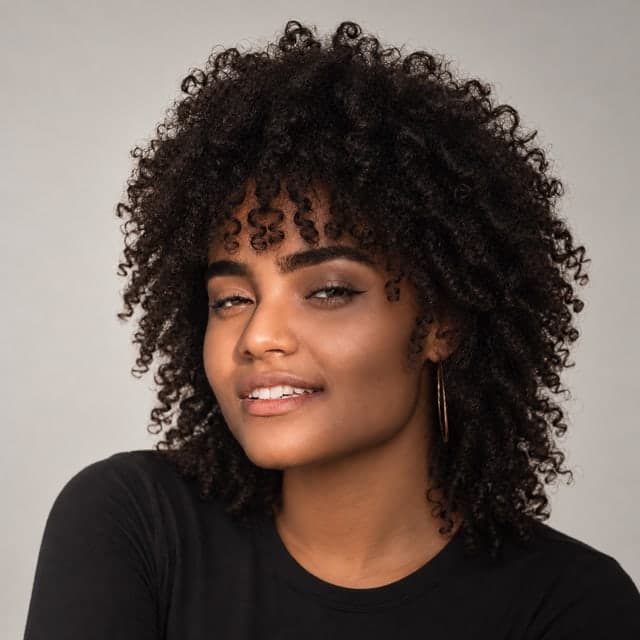 Curly shag
Curls with a springy fringe; curly micro bangs are cut dry and a little longer to allow for shrinkage.
Upkeep
High upkeep
A few weeks of growth turns micro bangs into ordinary bangs, so trims come often: stylists suggest every two to four weeks, plus a little styling every day. They sit right on the forehead and soak up oil from the skin, which shows fast on a fringe this short. With so little length there is not much room to trim off damage either, so go easy on heat. Growing them out is slow: hair grows about half an inch a month, so it can take up to six months before the change shows, and some stylists hold off on blending trims until the fringe reaches the cheekbones.
How to ask your stylist
- Point to the exact spot on your forehead. An inch or two below the hairline is micro; just above the brows is closer to baby bangs, so the spot says more than the name.
- Ask for the first cut slightly longer than your target, especially if you want to wear them more than one way. Going shorter later takes a minute.
- Say whether you want them blunt and straight across, or choppy: point cutting gives a softer, feathered edge.
- On curly or coily hair, ask for a dry cut, a little longer than the length you want and shaped to your natural pattern, since curls shrink as they dry.
How to style it
Blow-dry them flat and straight down while they're damp, with a heat protectant if you also use a flat iron, then smooth on a little styling cream to keep them in place. Between washes, a spritz of dry shampoo on the fringe alone takes away the oily look. Curly micro bangs need a curl-defining cream or pudding scrunched in, and they look best air-dried in their own shape.
Questions
How can I see what I'd look like with micro bangs?
Upload one clear, front-facing photo to Styloom and pick Micro bangs. You get an AI preview of your own photo in about 20–30 seconds. Since micro bangs take a while to grow out, previewing them first is a sensible step.
What's the difference between micro bangs and baby bangs?
The names are often swapped. When stylists separate them, micro bangs are the shorter, blunter style, ending an inch or two below the hairline or around mid-forehead, while baby bangs are a little longer and softer, closer to the brows.
Can you have micro bangs with curly hair?
Yes, but they are a bigger commitment. Curls shrink as they dry, so curly micro bangs are cut dry and slightly longer, then defined with a curl cream; the result is soft and springy rather than sharp.
How long does it take to grow out micro bangs?
Months. Hair grows about half an inch a month, so it can take up to six months before the fringe looks noticeably longer. Clips or a headband help in between, and skipping trims until the bangs reach the cheekbones keeps the length you gain.
Are micro bangs good for thin hair?
Yes. Thin to medium hair is often the easiest for micro bangs, and a choppier, slightly uneven cut suits fine hair well.
Sources
Written in our own words from common salon and barber advice. The example photos are AI-generated and show the style from the front. Updated November 6, 2026.