Long layers
Long layers are layers cut into long hair to take weight out of the lengths while the outline keeps most of its length. Instead of hanging as one heavy sheet, the hair falls in soft steps, so it moves more and holds a blow-dry or waves better. The change is subtle, which makes it an easy first step if you want to keep your length.

What are long layers?
Layering removes weight from inside the haircut rather than off the bottom. That is why long layers don't add volume by themselves: they make it easier for the hair to hold the lift and shape you give it when styling. Done well, the steps blend into each other, with no harsh line where one layer ends.
Stylists adjust the technique to the hair. Straight hair shows every step, so the layers sit inside a strong outline below the shoulders; placed badly, they look stacked. On fine hair, too many layers weaken the outline, so more weight is kept at the ends and toward the front. On thick or wavy hair, more weight can come out of the mid-lengths, which helps waves and curls stay defined.
Long layers can stay in the lengths alone or come with face framing pieces and a fringe. Add short layers around the face and lift at the crown and the idea becomes a butterfly cut; make the layers choppier and more textured and it moves toward a long shag.
Who it suits
Often suggested for
Most textures can wear them. Fine hair can look fuller when the layering is light and the ends keep their weight; thick hair loses bulk that drags it down; on waves and curls the layers help the pattern show. The catch is humidity, which can make layered ends frizz more than a one-length cut.
Long layers vs face framing layers
 Long layers
 Face framing layers
| Long layers | Face framing layers | |
|---|---|---|
| Where the cut goes | Through the lengths, all around the head | Only the front pieces around the face |
| What it changes | Weight and movement everywhere | The outline around your face |
| The back | Lighter, with visible steps | Untouched: full weight and length |
| On fine hair | Needs a light hand so the ends stay full | Leaves the rest of the hair as it is |
If your hair feels heavy or flat all over, long layers fix that; if you only want a change around your face, face framing layers do it with less cut. Layered hair usually falls into some longer framing pieces at the front anyway, so the real question is how short the front should go.
Long layers variations
 Butterfly cut
Long layers plus short face layers and crown lift, blown out so the front flips away.
 Long shag
A rougher, more lived-in cousin: most of the layering sits on top, and it usually comes with bangs.
 Long waves
Loose waves on long hair; with layers underneath, each wave can sit at its own height.
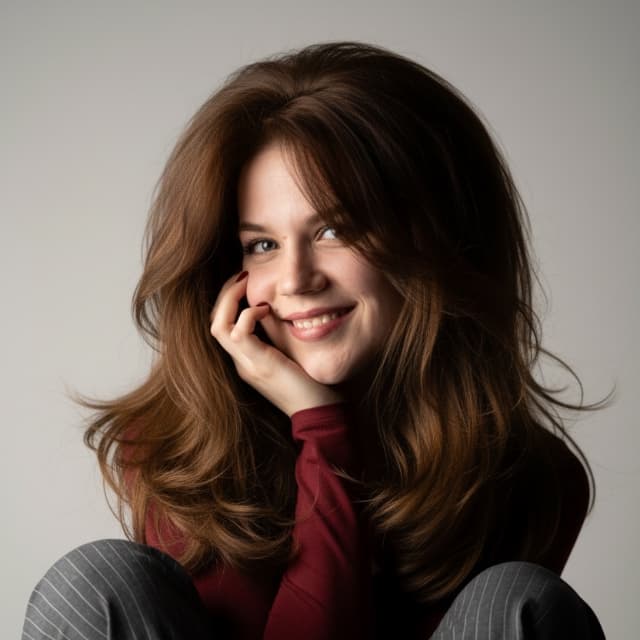 '90s blowout
The full, round-brushed way to wear them, with lift at the roots and the layers rolled outward.
 Curtain bangs
A fringe that splits in the middle and leads into the first layer at each side.
Upkeep
Low upkeep
Because the length is kept, trims are mostly about keeping the ends healthy and the layers light; hair brand guidance is about every six to eight weeks. As the layers grow, they move down and blend into the length rather than leaving a hard line. Growing them out completely takes patience and a few trims, since the shortest layer has to catch up.
How to ask your stylist
- Give a landmark for the length you want to keep: past the shoulder blades, the middle of the back, or only the dry ends off.
- Describe the texture: soft, blended layers for movement, or choppier ones with wispy ends.
- Tell them how you wear your hair day to day. If you mostly air-dry or tie it up, say so, so the layers suit the way you really wear it.
- For fine hair, request light layering that keeps weight at the ends. For straight hair, ask how they will keep the steps from looking stacked.
- Say whether you want face framing pieces or a fringe at the front, or layers only through the back.
How to style it
Long layers show best with a round-brush blow-dry: lift at the roots and the ends turned under or out, which makes the steps visible. On wavy hair, a light mousse or curl cream scrunched in and left to air-dry lets the layers fall into place. A little serum or oil on the ends keeps them smooth, especially in humid weather.
Questions
How can I see what I'd look like with long layers?
Upload one clear, front-facing photo to Styloom and pick Long layers. You get an AI preview of your own photo in about 20–30 seconds. Layers are a quieter change than a new length, so expect a subtle difference, especially if your hair is already layered.
Do long layers make hair look thinner?
They can if there are too many. Layering removes weight, so fine hair needs fewer, longer layers with weight kept at the ends; done that way, layers can make it look fuller.
Are long layers good for thick hair?
Yes. They take out the bulk that weighs thick hair down, so it feels lighter and moves more instead of sitting as a heavy block.
Do long layers work on curly hair?
Yes. Taking weight out of the lengths lets curls spring up and stay defined instead of being pulled flat at the top.
Will long layers make my hair shorter?
Not much, if you say so. The layers are cut inside the length, so the outline can keep nearly all of it; on fine hair a stylist may suggest taking a little off to make the ends look stronger.
Sources
Written in our own words from common salon and barber advice. The example photos are AI-generated and show the style from the front. Updated November 6, 2026.