Quiff
A quiff is a men's haircut with a short back and sides and a longer top, where the hair at the front is pushed up and back off the forehead. It is the looser, more textured relative of the pompadour: the front is lifted but left in visible pieces rather than smoothed into one wave, and it usually takes less styling.

What is a quiff?
The length sits at the front. The top is cut longest at the hairline and a little shorter toward the crown, so the hair lifts instead of falling forward, and layering takes out bulk so it doesn't sit like a helmet. Most hair needs at least two to three inches on top for a quiff.
Under it, the sides can be a classic scissor taper, a low or mid fade, a skin fade or a disconnected undercut, and the top can be neat and combed or choppy and messy. The example on this page is a textured quiff: cut with jagged layers, then styled matte and separated.
The quiff dates from the 1950s, when it combined elements of the pompadour and the flattop. It was a staple of Britain's Teddy Boys and came back in the 1980s and again in the 1990s.
Who it suits
Often suggested for
Less often suggested for long faces.
The lift adds height, so a taller quiff makes a round face look longer, while an oval face suits a moderate height. It works on straight, wavy and curly hair, and with tight sides and a textured top it makes fine hair look fuller.
Quiff vs modern pompadour
 Textured quiff
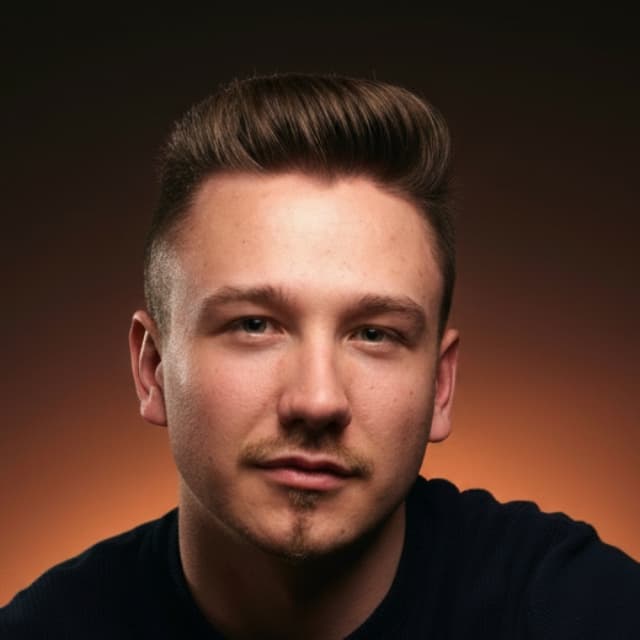 Modern pompadour
| Quiff | Modern pompadour | |
|---|---|---|
| Shape at the front | Pushed up and left in separate pieces | One smooth, sculpted wave |
| Finish | Piecey, with natural movement | Smoother and often shinier |
| Typical product | Clay, paste, putty or texture powder | Pomade or a firm cream |
| Minimum on top | Two to three inches | Three to four inches |
| Daily styling | Quick: fingers and a little product | Longer: blow-dry, then comb |
Both lift the front and keep the sides short; the difference is texture. Choose the quiff for a looser, more casual look and quicker mornings, the pompadour for a polished, sculpted one.
Quiff variations
 Low taper fade
A quiff on low taper fade sides: only the lowest part is cut close, so it grows out gently and stays office-friendly.
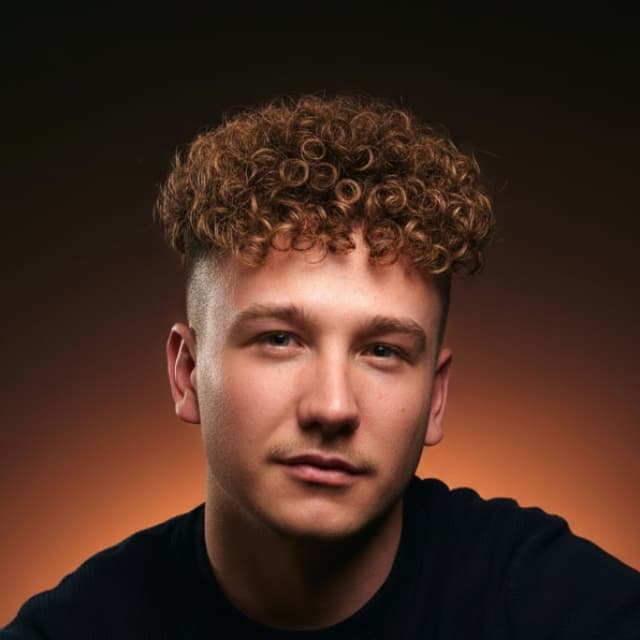 Curly top taper
Curls kept long on top and lifted at the front, with the edges tapered close.
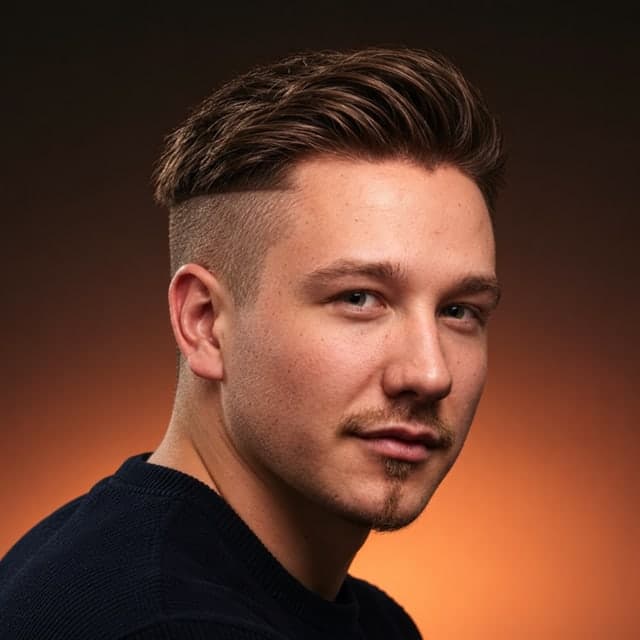 Undercut
The undercut quiff: short sides with no blend, so the lifted top stands apart from them.
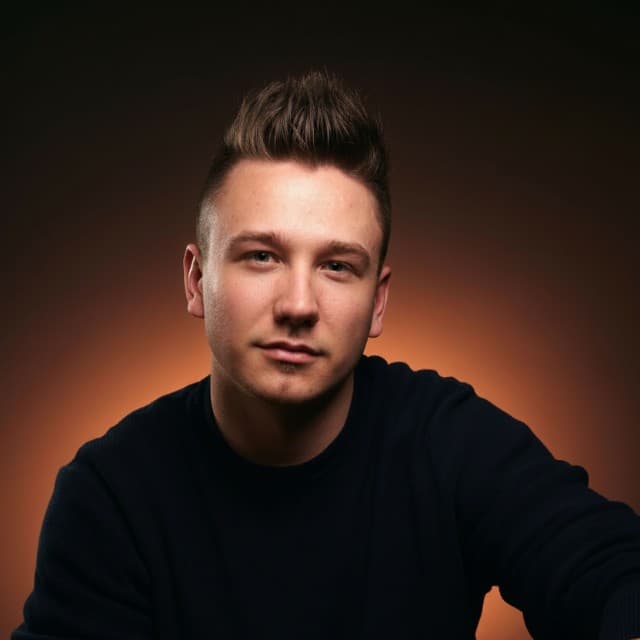 Faux hawk
The lift narrowed to a strip down the middle of the head, a nod to the mohawk the quiff has borrowed from.
 Comb over
Sweep the lifted front over to one side from a part and the quiff turns into a comb over.
Upkeep
High upkeep
The sides set the schedule: a fade or an undercut loses its clean line first, while a scissor taper grows out more gently. On top, the sign is the front: once it gets long and heavy enough to flop forward instead of lifting, it needs a cut. Day to day it is quicker than a pompadour, and short quiffs dry and style fastest.
How to ask your barber
- Ask for a quiff with the front left longest and the crown a little shorter, so the hair lifts up instead of collapsing forward.
- For a textured quiff, ask for jagged layers on top and point cutting for separation; for a cleaner one, ask for soft layering with the bulk taken out.
- Pick the sides: a scissor taper, a low or mid fade, a skin fade or an undercut. If you don't want bare skin, say the fade should stop at a short guard.
- With thick hair, ask for some thinning on top so a short quiff doesn't puff up.
- Ask the barber to show you the lift point at the front: the section you push up when you style it.
How to style it
Lift first, then push back: blow-dry the front upward at the roots with a brush or your fingers, then set it back slightly. On dry hair, a clay or paste gives a matte, separated finish, a putty holds more height, a texture powder adds quick volume and a pomade gives a slicker, shinier quiff. Fine hair gets more lift from a volumizing spray or mousse before drying; curls do better with a curl cream, scrunched and air-dried or diffused.
Questions
How can I see what I'd look like with a quiff?
Upload one clear, front-facing photo to Styloom and pick Textured quiff. You get an AI preview of your own photo in about 20–30 seconds. A straight-on photo shows the lift at the front best.
How long does your hair need to be for a quiff?
At least two to three inches on top for most hair, with the front a little longer. A short quiff works with less, but the shorter it is, the more the blow-dry and the product matter.
Does a quiff work with curly hair?
Yes; curls give it texture on their own. The barber takes bulk off the sides and layers the top, and a curl cream defines the shape without frizz.
Is a quiff good for thin hair?
Often, yes. A textured quiff with tight sides makes the top look fuller. Use a light product such as a clay or a volumizing spray, since heavy, greasy ones weigh fine hair down.
Why does my quiff fall flat during the day?
Usually too little lift at the roots or too much product. Blow-dry the front upward before pushing it back, use less product, and switch to a firmer putty or clay if it still sinks.
Sources
Written in our own words from common salon and barber advice. The example photos are AI-generated and show the style from the front. Updated November 6, 2026.