Types of fades
Seven fade haircuts, from a low fade to a burst fade. The diagrams show where each one starts; the photos are examples you can try on your own photo.
Low fade
Starts just above the ears and follows the hairline down at the back. The most subtle fade: the sides keep more of their weight.
Mid fade
Starts higher, somewhere between the middle of the sides and the temples. A clearer contrast between the sides and the top.
High fade
Starts high on the sides, close to where the top of the head curves down. The strongest contrast; the eye goes to the hair on top.
Skin fade
Any fade that goes all the way down to bare skin at the bottom (also called a bald fade). It can start low, mid or high.
Low taper fade
A low fade where the length changes gradually, without a visible line, and stops above the natural hairline.
Drop fade
The fade line curves down behind the ear toward the back of the head instead of running straight around.
Burst fade
Faded in a half circle around the ear; the hair at the back stays longer, down to the neckline.






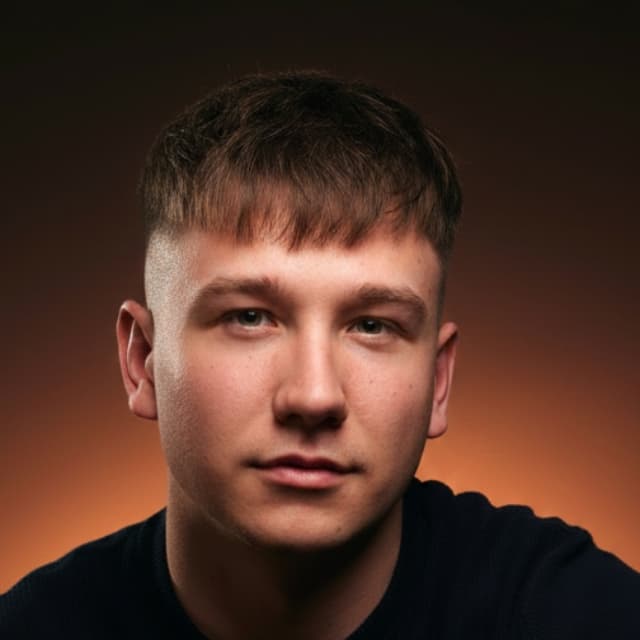
Fades compared
Taper vs fade: a taper only shortens the sideburns and the neckline, a fade takes the sides and back down. Low vs mid vs high fade: where the fade starts, how much contrast it gives and how often it needs a touch-up.
How to ask your barber for a fade
- Where it starts: low, mid or high, and whether it drops behind the ear.
- How short it gets at the bottom. Barbers use clipper guard numbers, and the lower the number, the shorter; if you want bare skin, say “skin”.
- How the change looks: gradual, or with a visible line.
- What stays on top, and a picture. A preview of the cut on your own photo works too: each one can be saved or turned into a card with the style’s name for your barber.
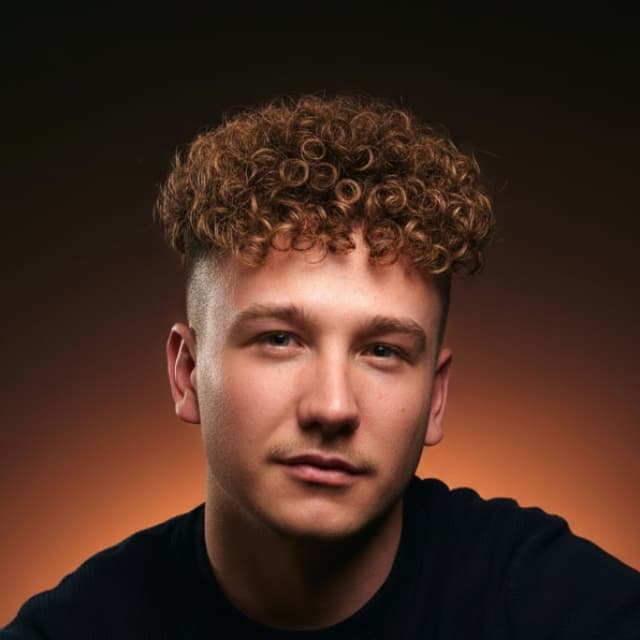
Fades with other cuts



Sources
This guide follows common barber advice, written in our own words. Barbers don’t all draw the lines in the same place. The diagrams are ours; the example photos are AI-generated and show each cut from the front. Updated November 6, 2026.