Drop fade
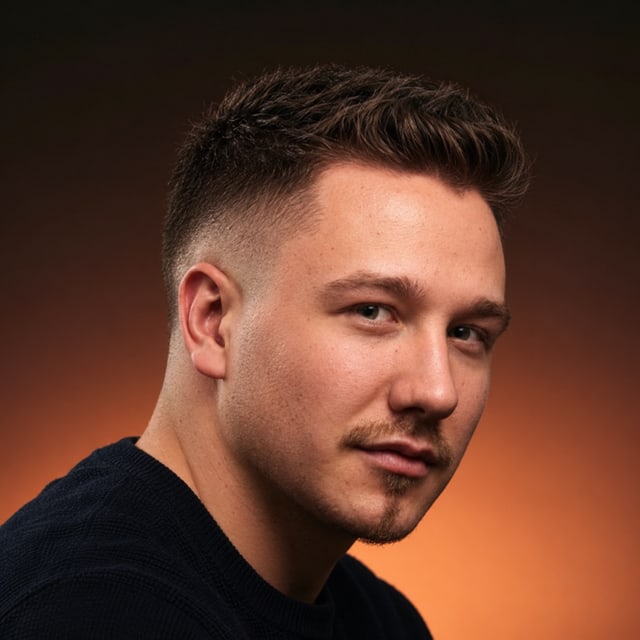
A drop fade is a fade whose line curves down behind the ear instead of running level around the head. It sits higher at the temples, dips as it passes the ear and finishes low at the nape, following the shape of the skull. The sides and back are still faded all the way around; only the line changes.
What is a drop fade?
Most fades are cut along a line that runs level around the head. A drop fade bends that line: it starts at the temple, drops as it passes behind the ear and ends at the nape, below the point where it began. From the side, the result is a smooth arc instead of a straight band.
The drop is a shape, not a height. It can be added to a low, mid or high fade, and the bottom can go down to bare skin or stop at a short guard. Barber guides call it most natural on a low or mid fade; a high drop fade exists, but some barbers find the curve looks odd when it starts that high. Some barbers cut low and mid fades with a slight drop by default, so it's worth saying whether you want one.
Because the line sits lower at the back, more length stays on the back of the head, and barbers use the curve to soften a bump or a flat spot there. It goes under almost any top: curls, waves or twists left full, a textured crop, a French crop, a pompadour or a longer swept top.
Who it suits
Often suggested for
Less often suggested for diamond faces.
The curve shows from the side and the back; from the front, a drop fade reads like any fade of the same height. It helps most on a head that looks flat or uneven at the back when everything is cut short, and it works on straight, wavy, curly and coily hair alike.
Drop fade vs burst fade
 Drop fade
 Burst fade
| Drop fade | Burst fade | |
|---|---|---|
| The line | Curves down behind the ear toward the nape | A half circle around the ear |
| The back | Faded all the way around | A strip left longer, down to the neckline |
| The look | Clean and classic | Edgier |
| Often worn with | Curls, crops, a French crop or a pompadour | A mullet or another longer back |
Pick the drop fade if you want a clean fade all the way around with a softer, curved line. A burst fade keeps the back long, which is why it often goes with a mullet.
Drop fade variations
 Low fade
The same low start, but the line runs level around the head with no drop behind the ear.
 Mid fade
Start the drop higher, between the middle of the sides and the temples, for a mid drop fade.
 Skin fade
Take the bottom of the drop down to bare skin for the sharpest contrast.
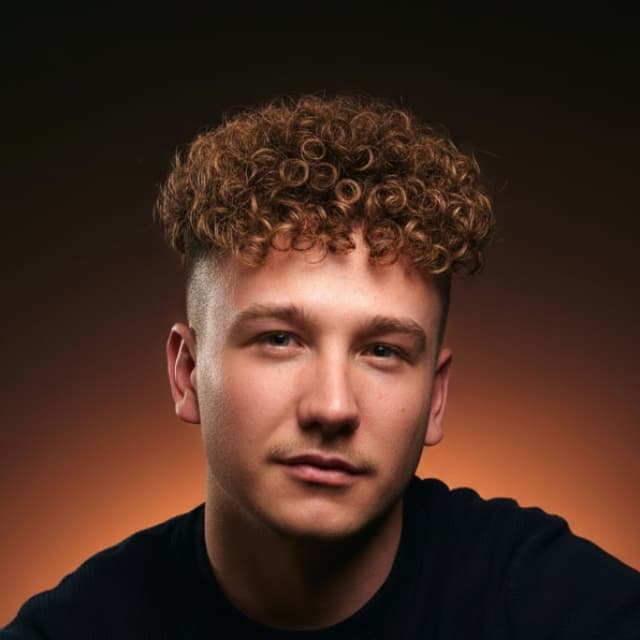 Curly top taper
Curls or waves kept full on top with close, tidy edges.
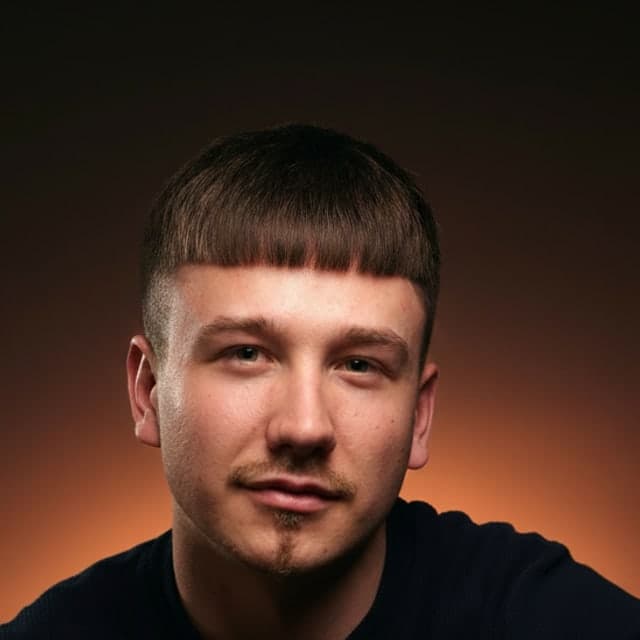 French crop
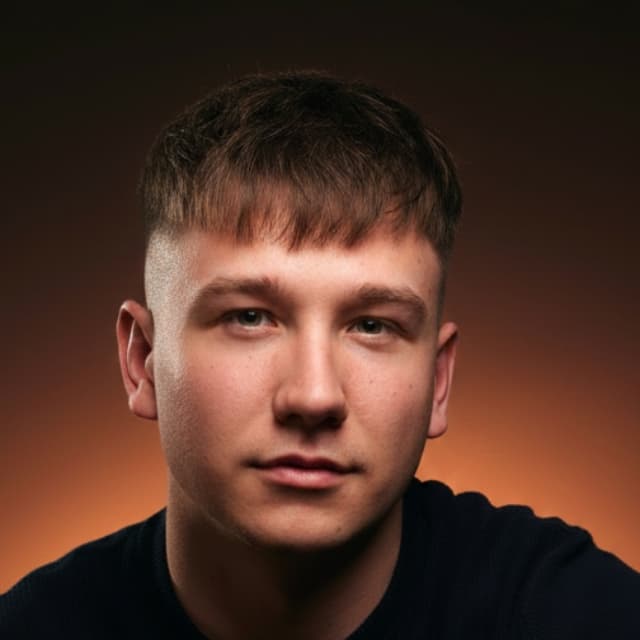
A short top with a blunt fringe; barber guides pair it with a drop fade for a clean, casual look.
 Modern pompadour
Volume swept up and back; a drop fade is a common choice under a pompadour.
Upkeep
High upkeep
The curved line behind the ear is the first detail to blur as the hair grows. Barber guides put a touch-up at about every two to four weeks: a low drop can stretch toward the longer end, a mid or high one needs it sooner. Brushing the faded sides upward between cuts keeps the blend looking sharper for longer. Day to day, the drop needs nothing beyond what the top style needs.
How to ask your barber
- Say "drop fade" and point to where it should start at the temple and how far it should dip behind the ear. A shallow drop looks subtle; a steep one stands out.
- Say how high it starts, low or mid being the usual choice for a drop, and whether the bottom should end on a short guard or on bare skin.
- Give the top length and how you wear it, ideally with a photo of the top style, so the blend from the drop into the top suits it.
- Ask about the front: a line-up at the hairline and temples sharpens the look but grows out faster than a natural edge.
How to style it
The styling is all on top. Curls and waves do best with a curl cream and air-drying; a textured crop takes a little matte clay, paste or sea salt spray worked through dry hair; a pompadour or slick top needs a blow-dry for lift and a pomade to hold it. A matte pomade suits finer hair, while a glossier one spreads more easily through thick, coarse or coily hair.
Questions
How can I see what I'd look like with a drop fade?
Upload one clear, front-facing photo to Styloom and pick Drop fade. You get an AI preview of your own photo in about 20–30 seconds. The preview shows the top and the overall shape; the curve behind the ear is something to settle with your barber.
What's the difference between a drop fade and a regular fade?
A regular fade keeps its line roughly level all around the head. A drop fade lowers the line behind the ear, so it arcs toward the nape instead of running straight back.
What is a low drop fade?
A low fade, starting just above the ears, whose line drops behind the ear toward the neck. It's the subtlest version: from the front it looks like a low fade, and the curve shows from the side.
Can you get a high drop fade?
Yes, though barbers differ on it. Some say the drop looks most natural on a low or mid fade and odd when it starts high; others cut high drop fades for a stronger contrast with the hair on top.
Does a drop fade work with curly hair?
Yes, it's a common pairing with curls, waves and twists: the fade keeps the sides tidy while the top keeps its full texture.
Sources
Written in our own words from common salon and barber advice. The example photos are AI-generated and show the style from the front. Updated November 6, 2026.