Mullet
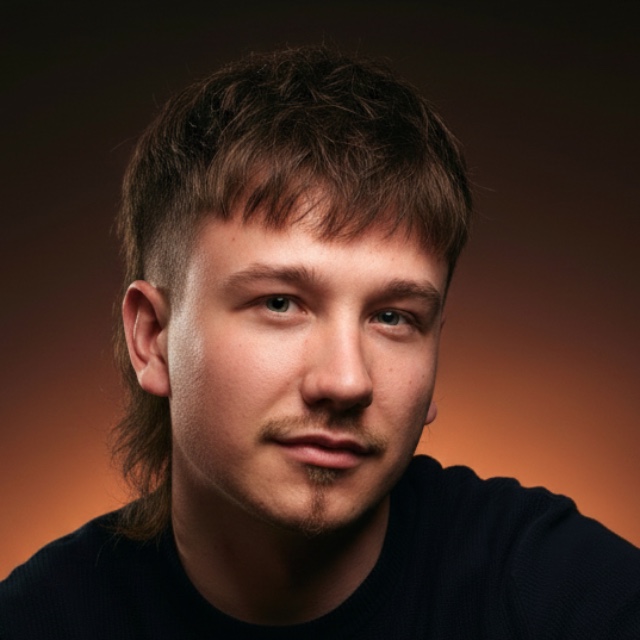
A mullet is a haircut that is short at the front, top and sides and longer at the back: business in the front, party in the back. The classic version keeps a big jump between the two lengths; the modern mullet is more textured and often has faded or tapered sides, like the taper fade mullet shown here.
What is a mullet?
The one element every mullet needs is the longer back, which can be anything from a few wisps at the neck to a full mane past the collar. The front, top and sides are cut short enough to read as a separate haircut, and the contrast between the two is the whole point.
The cut is much older than its name. Styles worn short in front and long behind turn up in ancient Rome and Byzantium, and in the 1980s the mullet was everywhere in the US, the UK and Australia. It came back around 2020, when lockdowns kept salons closed, and has settled into a modern form since.
The modern mullet keeps the long back but softens the rest: a choppy, textured top and fringe, a smaller jump between front and back, and often a fade at the sides. The example on this page is a taper fade mullet: the hair around the ears is faded down gradually, without a hard line, while the back is left long. In the 1970s the cut was usually choppy all the way around.
Who it suits
Often suggested for
A mullet needs texture, so it is easiest on wavy, curly or coily hair, which brings the movement on its own. Straight or fine hair can carry it with more styling, since the cut relies on some volume. It also takes commitment: the in-between weeks while the back grows can look awkward.
Mullet vs wolf cut
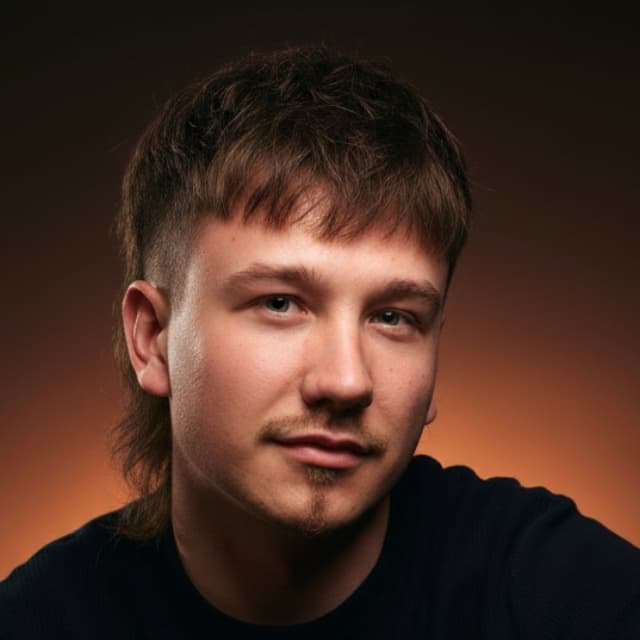 Taper fade mullet
 Wolf cut
| Mullet | Wolf cut | |
|---|---|---|
| The sides | Short, often faded or tapered | Layered, with more length |
| The layers | Few: a short top and a long back | Jagged layers all over, shortest at the crown |
| The back | Long, with some volume | Longer, thinned into wispy ends |
| The contrast | Strong, on purpose | Softer; the lengths blend |
The wolf cut borrows the mullet's longer back and blends it into shag layers. For a clear short-and-long contrast, ask for a mullet; for a softer, shaggier shape, ask for a wolf cut.
Mullet variations
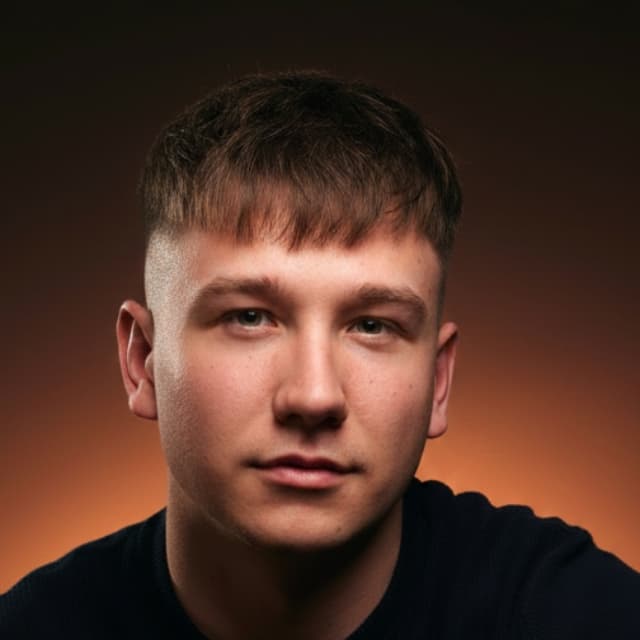 Burst fade
A half circle faded around the ear with the back left longer; grow the back out and it becomes a burst fade mullet.
 Textured crop
Keep only the cropped, piece-y front and drop the long back, and this is what you get.
 Men's shag
Layered all over instead of short on top and long behind; in the 1970s the shag and the mullet were close relatives.
 Bro flow
Long all over and swept back: it shares the length at the back but not the short front.
Upkeep
Medium upkeep
Day to day a mullet is easy, but it needs regular trims to keep its shape: one stylist guide suggests every six to eight weeks, and sooner if you wear a fringe. Faded sides blur faster than the rest, so they may need a quick tidy in between. To grow it out, ask the barber to soften the step between the short front and the long back a little at each visit, so it eases into a shag or a longer layered cut.
How to ask your barber
- Bring photos of mullets you like and say how bold it should be: a big jump from short to long, or a smaller, more blended step.
- Say what happens at the sides: faded down gradually around the ears for a taper fade mullet, a half-circle burst fade, or simply cut short for a classic mullet.
- Ask for texture and some weight taken out through the top and the back, so it moves instead of sitting as one heavy block.
- If your hair is all one length now, ask the barber to shape it in stages while the back grows, and say whether you want a fringe.
How to style it
Texture does most of the work. Work a sea salt or texturizing spray, or a little mousse, through damp hair, then let it air-dry, or use a diffuser if you have waves or curls; it shouldn't look over-styled. A soft pomade or a light serum on the ends defines the back and tames frizz. Washing a little less often helps too, because your natural oils add separation.
Questions
How can I see what I'd look like with a mullet?
Upload one clear, front-facing photo to Styloom and pick Taper fade mullet. You get an AI preview of your own photo in about 20–30 seconds. The style it applies is the modern taper fade mullet from the example, not a classic 1980s mullet.
Why is it called a mullet?
No one is sure. The Oxford English Dictionary credits a 1994 hip-hop song with coining, or at least popularizing, the word; the haircut itself is centuries older.
Is a mullet a fade?
Not by itself. A mullet is defined by the long back; the sides can be cut short, tapered or faded. A taper fade mullet and a burst fade mullet are modern mullets with a fade at the sides.
How long does your hair need to be for a mullet?
Longer than you might expect. One stylist guide suggests at least three to four inches on top and at the crown, and about five to six at the back; if your hair is shorter, a barber can shape it gradually as it grows.
Does a mullet work with curly hair?
Yes, and curls make it easier: the cut needs texture, which curly and wavy hair bring on their own. Let it air-dry or diffuse it, and define the ends with a light product.
Sources
Written in our own words from common salon and barber advice. The example photos are AI-generated and show the style from the front. Updated November 6, 2026.