Textured crop
A textured crop is a short men's haircut with a choppy top pushed forward into a short fringe, usually over faded or tapered sides. The barber cuts into the ends of the top so they break up instead of lying flat, which gives it a piecey, lived-in look. It takes little styling, and the forward fringe covers much of the hairline.

What is a textured crop?
The top carries the cut. One barber's spec puts it at roughly 1 to 2.5 inches at the crown, a little shorter toward the front: much shorter and there isn't enough hair to show texture, much longer and it stops being a crop. It is usually cut with scissors, then point cut, snipping into the ends so they finish at uneven lengths.
The fringe usually lands between the top of the eyebrows and about an inch above them, and it is left choppy rather than cut in one straight line. Underneath there is almost always a fade: a mid fade is a common pairing, a low fade or a taper keeps it softer, and a skin fade gives the most contrast. The nape is normally tapered so it grows out cleanly.
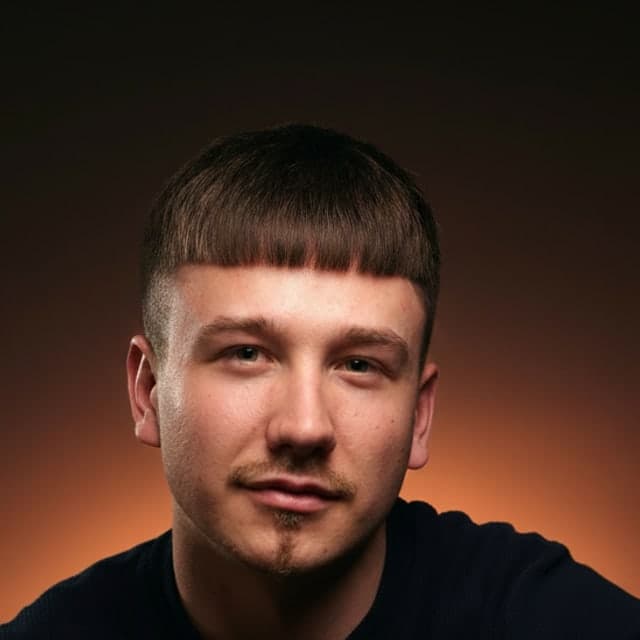
It is a close relative of the French crop, and barber guides describe the link in different ways: some call the textured crop the French crop's modern descendant, others treat the French crop as one kind of textured crop. The practical difference is the finish. A textured crop is broken up on top and at the fringe; a French crop keeps a heavier, cleaner fringe line.
Who it suits
Often suggested for
Thick, straight hair is the easiest to work with, because there is plenty of bulk to cut texture into, and wavy hair does half of the texturizing on its own. Fine hair can wear it too, but the barber should take out less bulk, not more, or the scalp starts to show through the top.
Textured crop vs french crop
 Textured crop
 French crop
| Textured crop | French crop | |
|---|---|---|
| The fringe | Choppy and broken up | Heavier, often one blunt line |
| The top | Point cut so the ends separate | Smoother and more even |
| The sides | Almost always a fade | A fade or a softer taper |
| The finish | Matte and messy on purpose | Neat, with a clean edge |
Go for the textured crop if you want movement and a messier finish; go for the French crop if the straight fringe line is the point. A middle version, a straighter fringe over a broken-up top, is easy to ask for too.
Textured crop variations
 Caesar cut
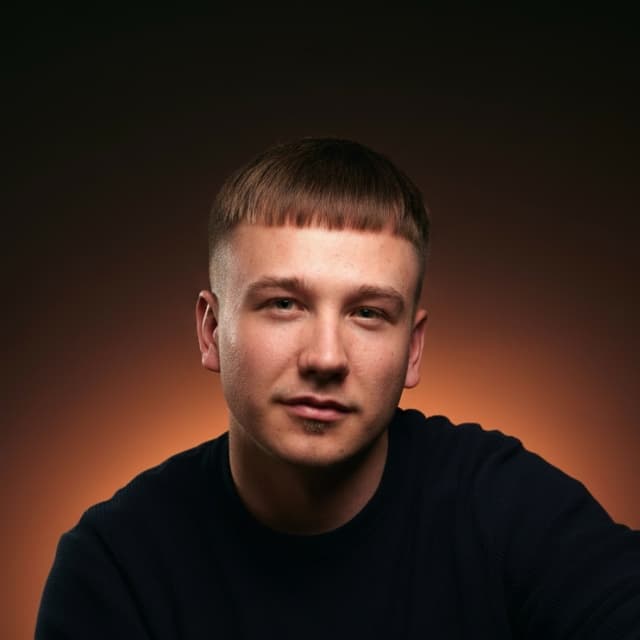
Shorter and stricter: an even top with a short, straight fringe and little texture work.
 Mid fade
The fade starts between the middle of the sides and the temples, enough contrast to make the top stand out.
 Skin fade
The bottom of the sides goes to bare skin for the sharpest contrast; it also shows regrowth soonest.
 Low taper fade
A low, gradual fade with no visible line, for the crop without high, tight sides.
 Curly top taper
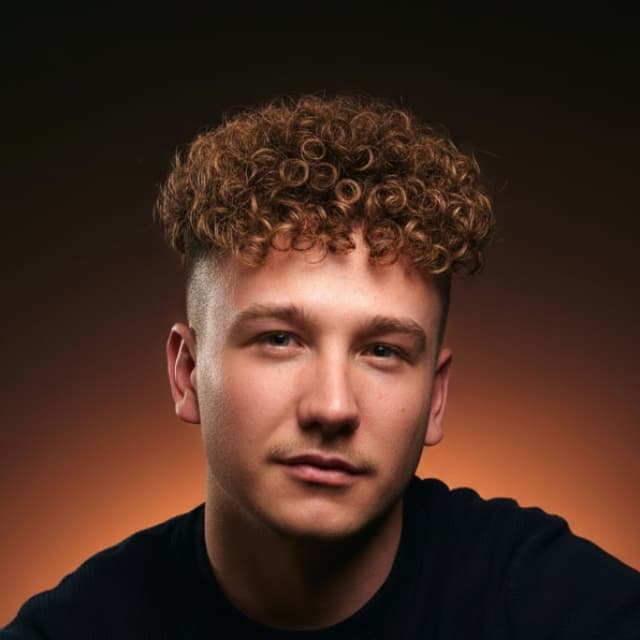
The curly version: the barber shapes the curls on top instead of chopping texture into them.
Upkeep
Medium upkeep
Each part grows out at its own pace. In one barber's schedule, a mid or high fade starts to blur after ten days to two weeks, a low fade or taper holds for about three weeks, the fringe reaches the brows at three to four weeks, and the top loses its choppiness after four to five. Barber guides put a cut at about every three to four weeks, or every two to three if you wear a high skin fade. Between visits, a quick tidy of the edges buys a few more days.
How to ask your barber
- Say "textured crop" and give a length for the top. One barber's sample request is about an inch and a half, point cut so it's choppy and pushed forward.
- Place the fringe: how far above the brows it should sit, and whether it's choppy, blunt or swept slightly to one side.
- Give the fade in guard numbers. A typical one runs from skin or a 0 at the bottom up to a 3 or 4 where it meets the top; a softer one starts at a 1.
- Ask for the nape to be tapered rather than squared off, and for the hairline at the temples to be left soft. A boxed nape looks fuzzy within about a week, and a hard edge at the temples clashes with the messy top.
- If your hair is fine, ask for less bulk to be removed. Bring one photo you like and one you don't.
How to style it
Start with towel-dried or dry hair and a matte product: texture powder for grip on fine hair, clay or paste for medium hold, or sea salt spray on damp hair before blow-drying it forward and slightly up. Use a fingertip's worth, warm it in your palms and work it from the back to the front, then pinch and twist small sections to separate them. Leave the fringe mostly alone, and skip shiny pomades, which flatten the texture.
Questions
How can I see what I'd look like with a textured crop?
Upload one clear, front-facing photo to Styloom and pick Textured crop. You get an AI preview of your own photo in about 20–30 seconds. A photo with your forehead and hairline visible shows best where the fringe will fall.
Is a textured crop good for a receding hairline?
Often, yes. The fringe is worn forward and can be shaped to your hairline, so it covers the temples. It does nothing for thinning at the crown.
Does a textured crop work with curly hair?
Yes, as a curly crop: the barber cuts the curls into shape on top rather than chopping texture in, and the sides are faded or tapered as usual.
Why does my textured crop look like a helmet?
Not enough texture was cut into the top, so it sits as one solid piece. Ask for more point cutting, or thinning shears if your hair is thick.
Why does my textured crop look like a mushroom after a few weeks?
The top grew out evenly while the fade grew in, leaving a dome. Staying on a three-to-four-week schedule, or asking for a longer fade transition, keeps it from happening.
Sources
Written in our own words from common salon and barber advice. The example photos are AI-generated and show the style from the front. Updated November 6, 2026.